A Week in Kuala Lumpur
First time in Malaysia. I only had a few free hours a day, so I saw the city in pieces. Just some thoughts.
I just spent about a week in Kuala Lumpur. I landed on a Sunday and I’m flying home to Shanghai on Friday. It wasn’t really a holiday. I had stuff to do most days, so the city happened in the few hours I had free between things. These are just my thoughts and what I saw, not a proper guide.
This was my first time in Malaysia, and really my first proper time in Southeast Asia. I went to Singapore once when I was very small, but I don’t remember any of it. So this was all new to me.
Overall I liked it. It’s an easy, relaxed city.
Bukit Bintang and the towers
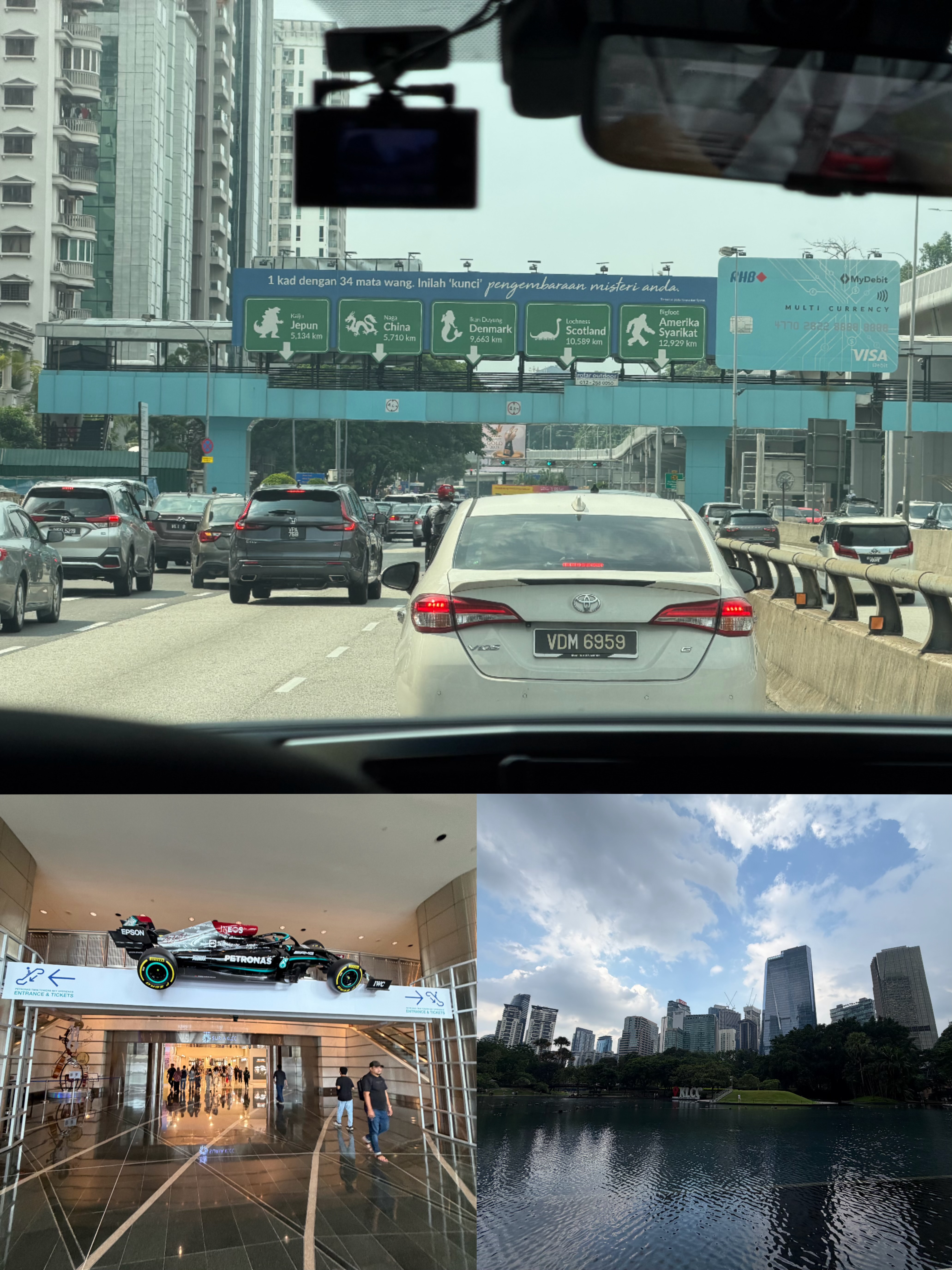
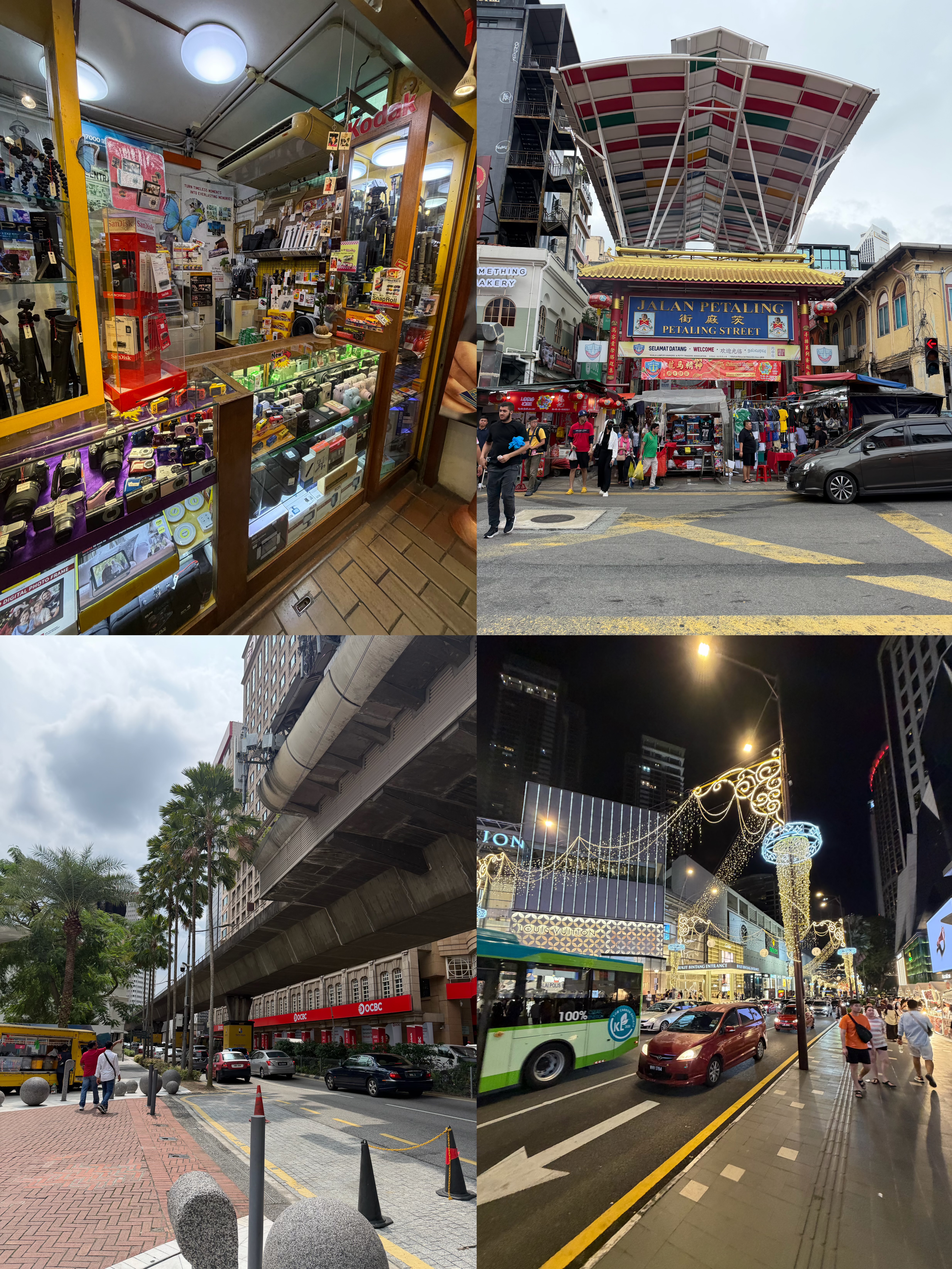
I stayed at the JW Marriott in Bukit Bintang, which is the main shopping and hotel area right in the center. I assumed the Petronas Twin Towers, the famous silver ones, would be walkable from there. They’re not. I even saw videos of people walking to them through a chain of indoor malls and tunnels, but even the sped up version of that walk was about three minutes, which told me the real thing would take way too long in the heat. So I took a taxi. And of course, traffic jam.
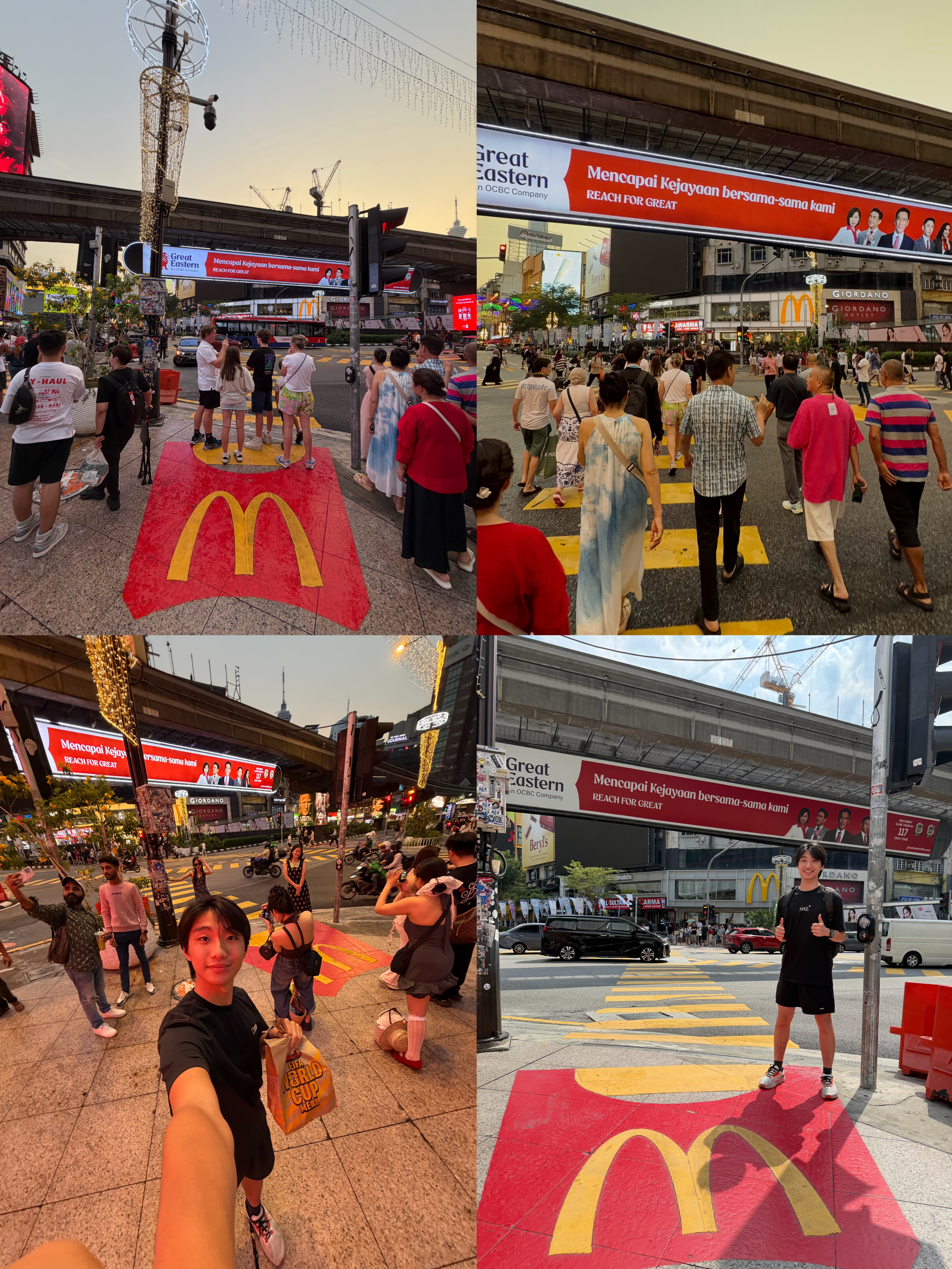
The traffic around Bukit Bintang and the towers is genuinely bad, and the crossings are the funniest part of it. The walk signal is short and you wait a long time for it, so people just start crossing on red. Once a few people go, everyone follows. Then when the light finally goes green for the cars, the cars can’t actually move because people are still walking across. And because the cars are stuck, more people figure it’s safe to cross too. It turns into this loop where nobody is really obeying the lights.
The strange thing is it still works. I think it works because everyone drives slowly and watches each other instead of trusting the signals. It’s stressful to look at, but nothing crashes, and clearly the locals don’t think of it as a problem at all. It’s just how the city moves.
There’s one crossing in Bukit Bintang that social media likes to call “KL’s Shibuya,” after the famous Tokyo crossing. It is clearly not that. It’s much smaller, and the main thing there is a McDonald’s with a big golden logo painted on the road. Calling that Shibuya is a bit funny. That said, it does look nice, and you can genuinely get good photos there.
The towers up close, and the photos
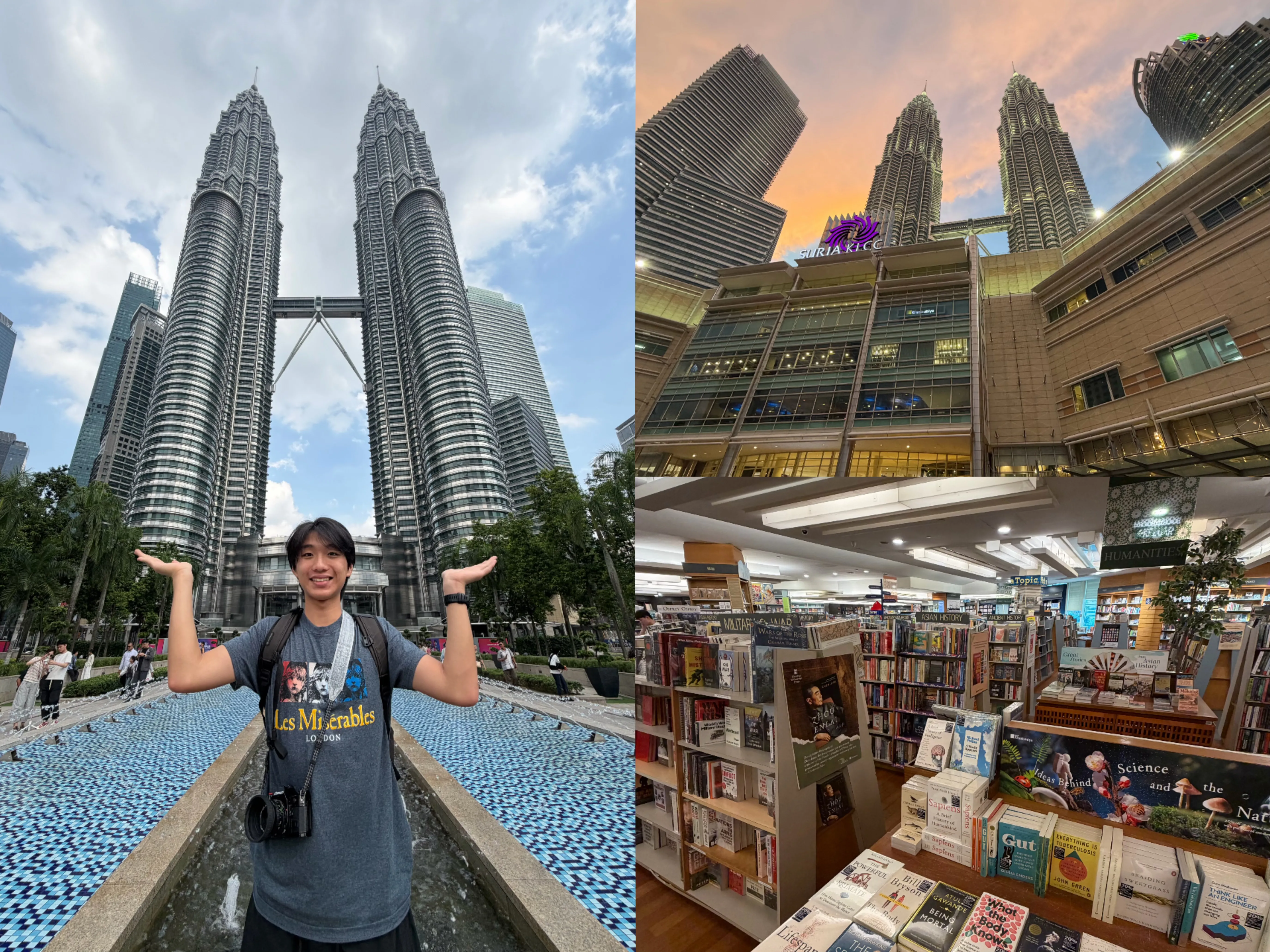
The Twin Towers are older now, they opened back in 1998, and you can tell, but they still look great, especially lit up at night. I went up to the Skybridge, the walkway that connects the two towers partway up, and the observation deck near the top.
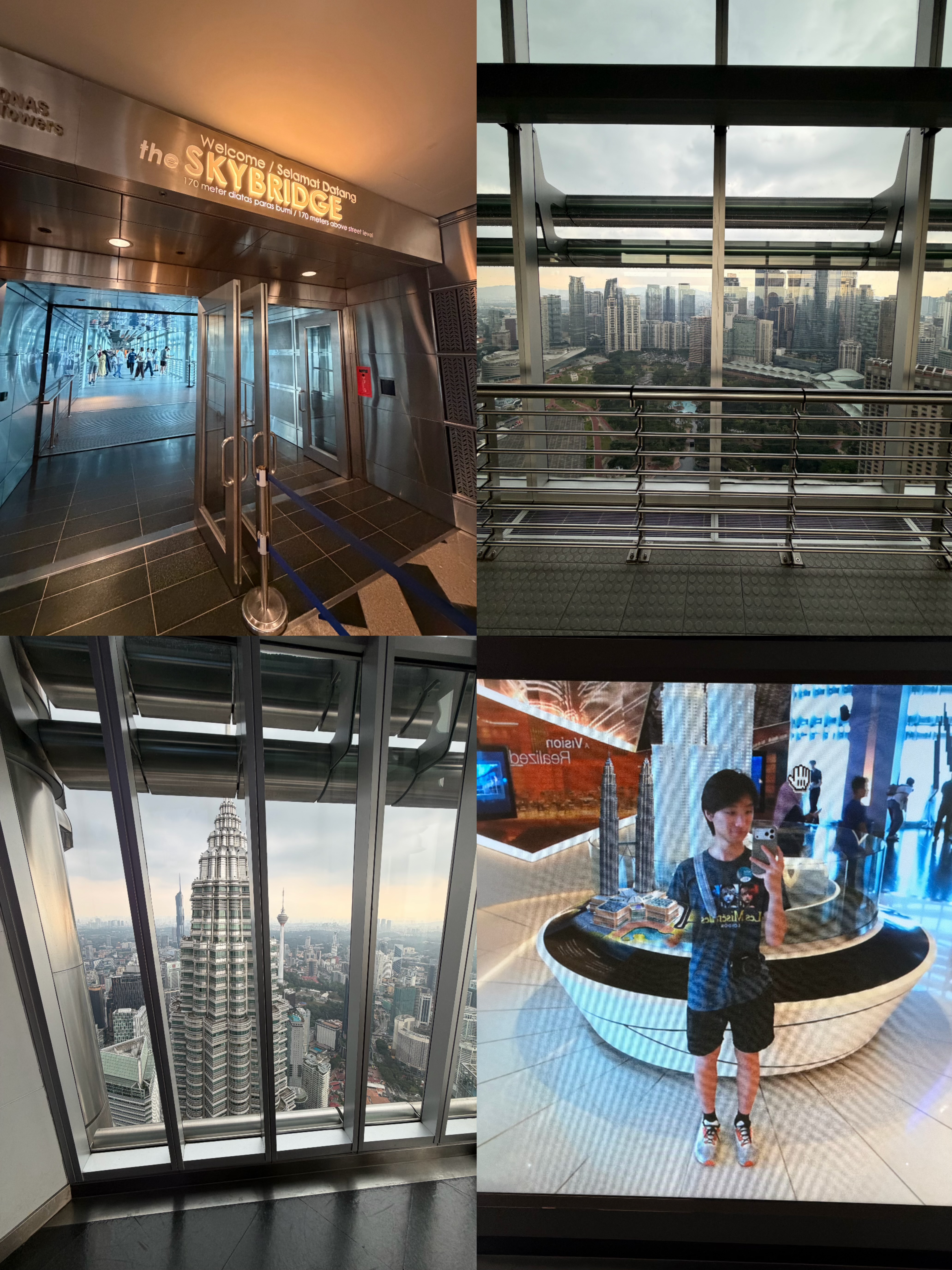
On the Skybridge they have an official setup where a camera takes your photo with the view behind you. I watched how it worked and thought it was kind of funny and touristy, but I wanted a few photos to post, so I paid. They came out pretty bad. That was 100 RM (about 167 RMB / $25).
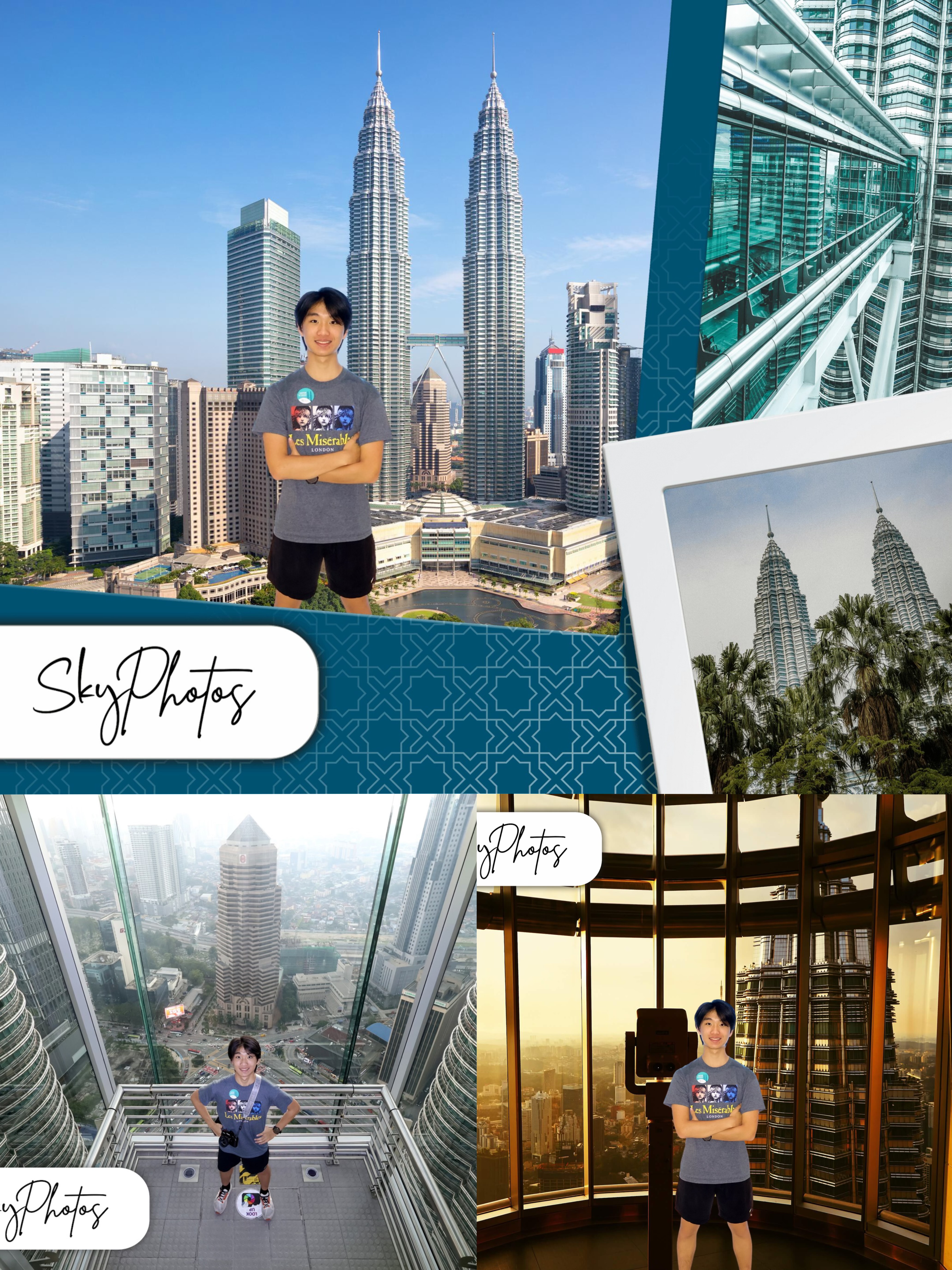
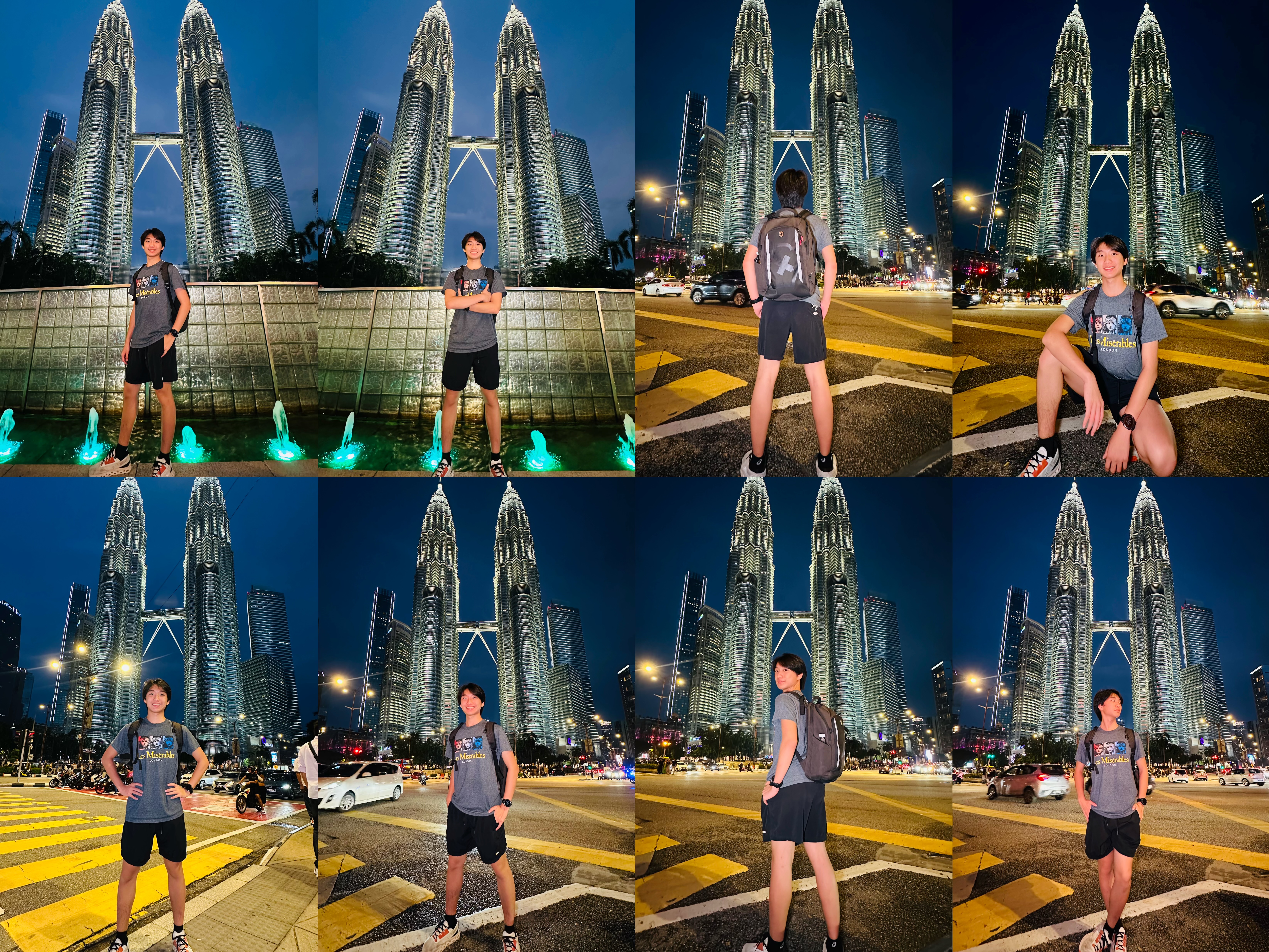
The better photos happened down at street level. Below the towers there are locals who take your photo for you with the towers in the background. When I paid I thought it was expensive, 130 RM (about 217 RMB / $32) for 27 photos. But afterward it made sense to me. The official Skybridge camera was 100 RM for a couple of bad shots. These guys gave me 27 genuinely good ones. And the area is so crowded that I could never have gotten a clean photo of just me on my own. They knew exactly where to stand and cleared space for me. So even though it felt like a lot in the moment, I think it was worth more than the official one.
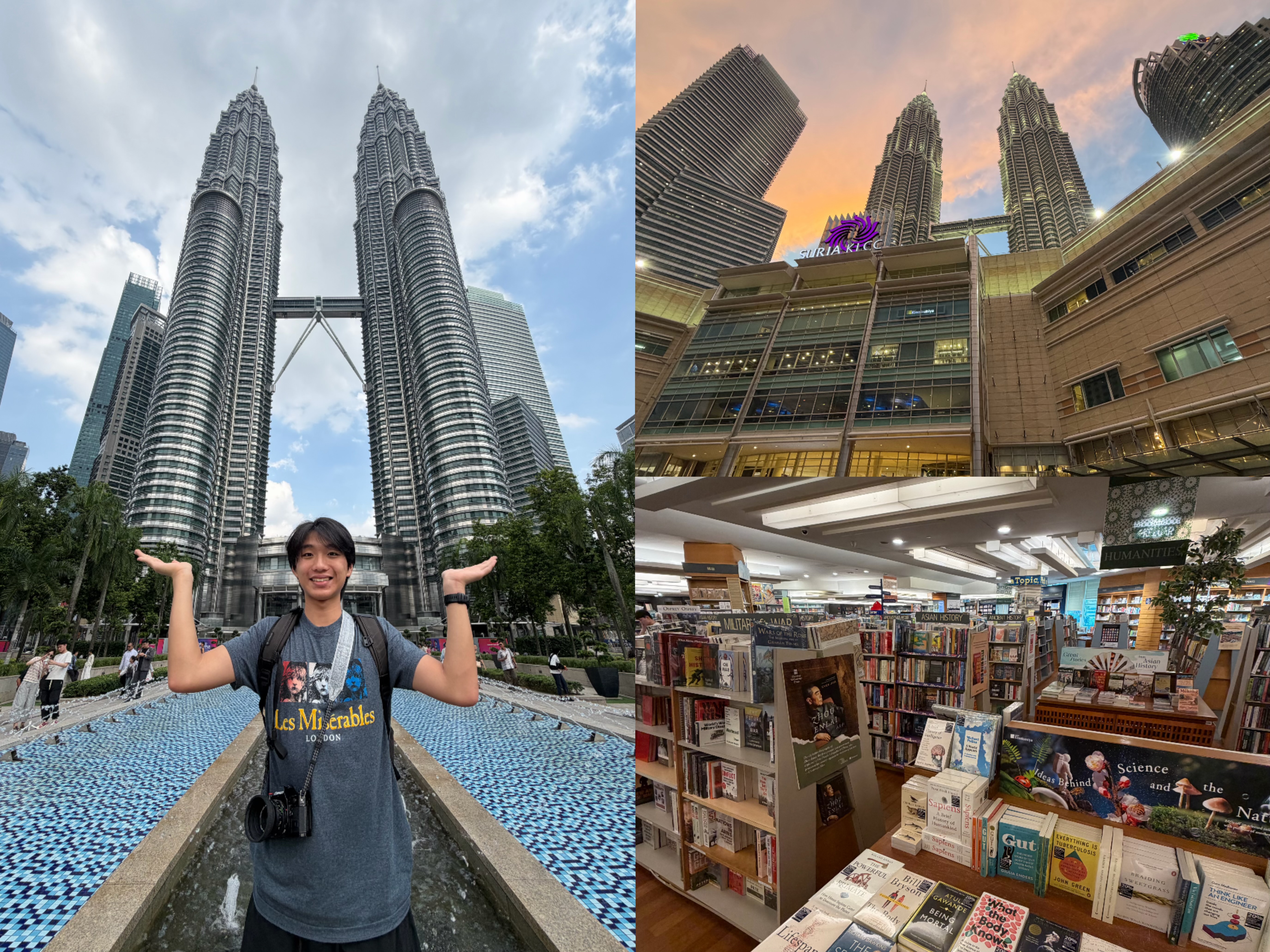
While I was up there I also stopped in Kinokuniya, a big bookstore in the mall under the towers, which was a nice quiet break from the crowds.
Putrajaya and the pink mosque
One afternoon I went out to Putrajaya, which is a planned city south of KL that Malaysia built in the 90s to move its government offices out of the crowded capital. It’s very deliberate and spread out, big empty boulevards, everything clearly designed on purpose.
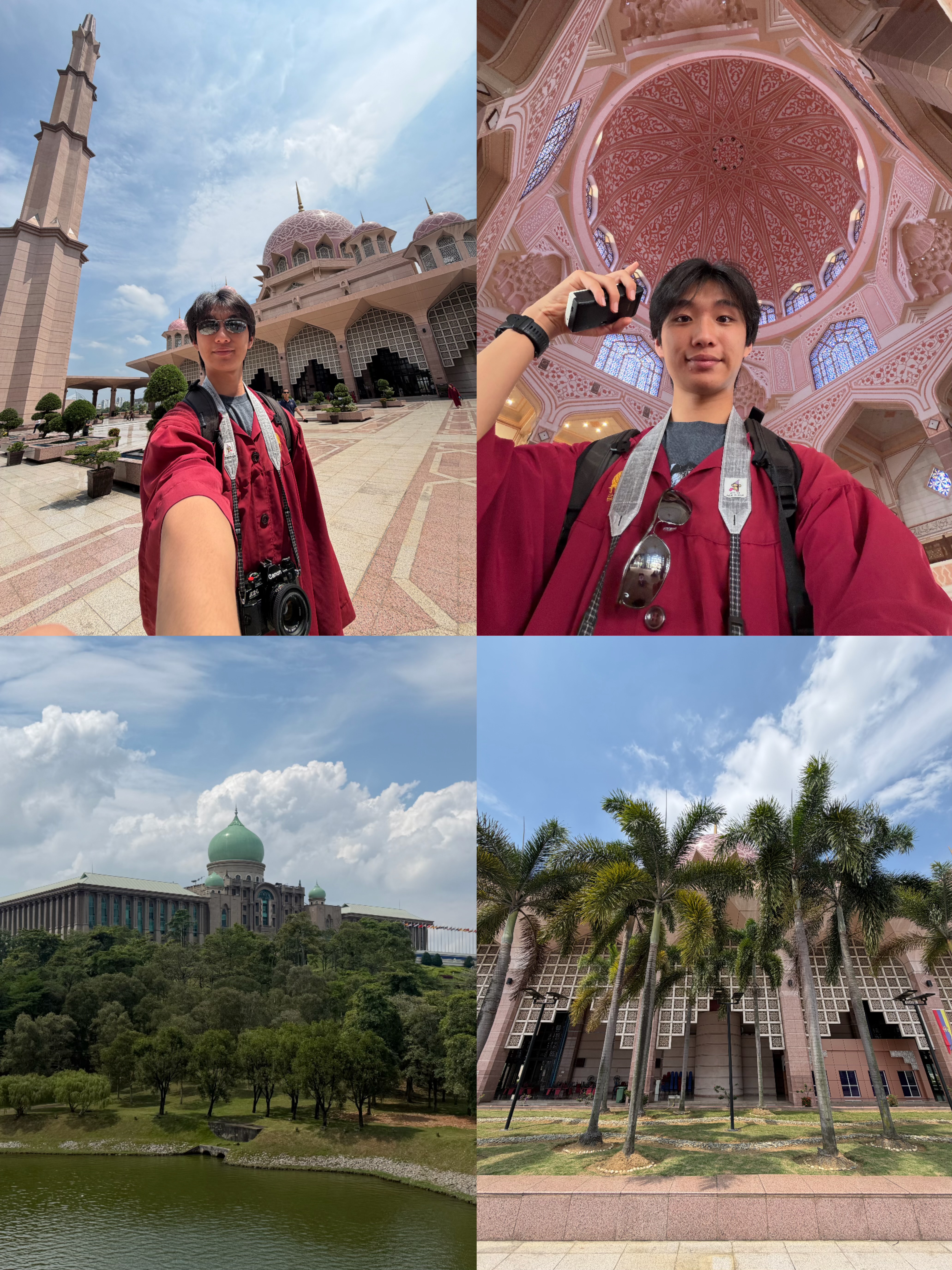
The reason I went is the pink mosque, officially Masjid Putra. It’s made from rose colored stone, so the whole thing, inside and out, is this soft pink. Before you go in they give you a robe to wear to cover up, which is normal for a working mosque. Thank god there was AC inside. From the grounds you can look across the water and see the Prime Minister’s office too. The weather that day was good, a little wind, and it was just a really nice, quiet walk. That calm was a good change from the city.
Chinatown
Another day I walked around Chinatown. The heart of it is Petaling Street, a covered market under a big red and green roof. Inside it’s packed, chaotic, and honestly it smells pretty bad, that hot, closed-in market smell.
It’s almost all fake goods, knockoff bags, shirts, wallets, all the luxury logos. It reminded me exactly of the Ladies’ Market in Hong Kong, and I’d bet a lot of it comes from the same wholesale sources in China. I didn’t buy anything. I wouldn’t want fakes anyway, and even if I did, there’s no point buying them here when they’re made in China to begin with, which is where I’m from.
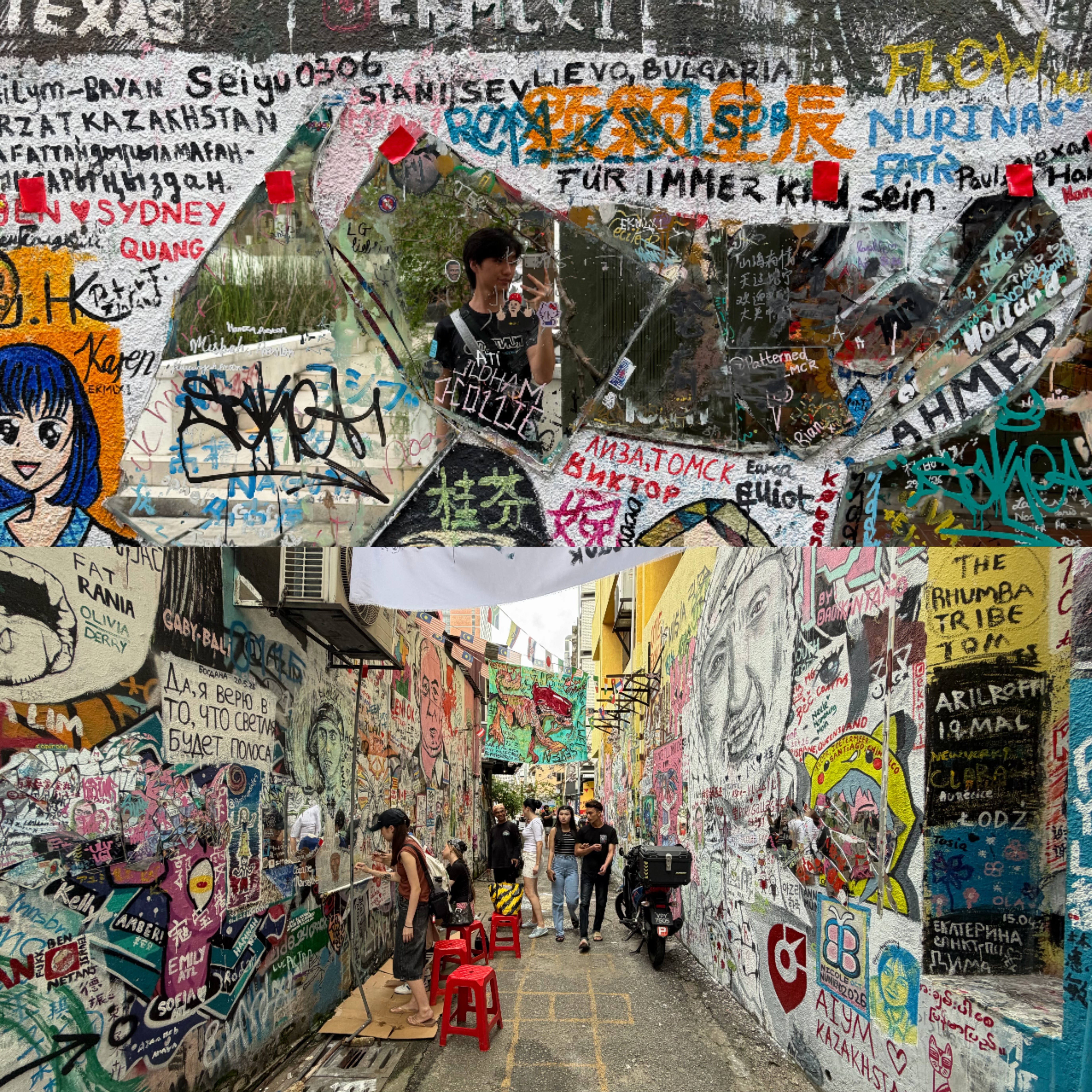
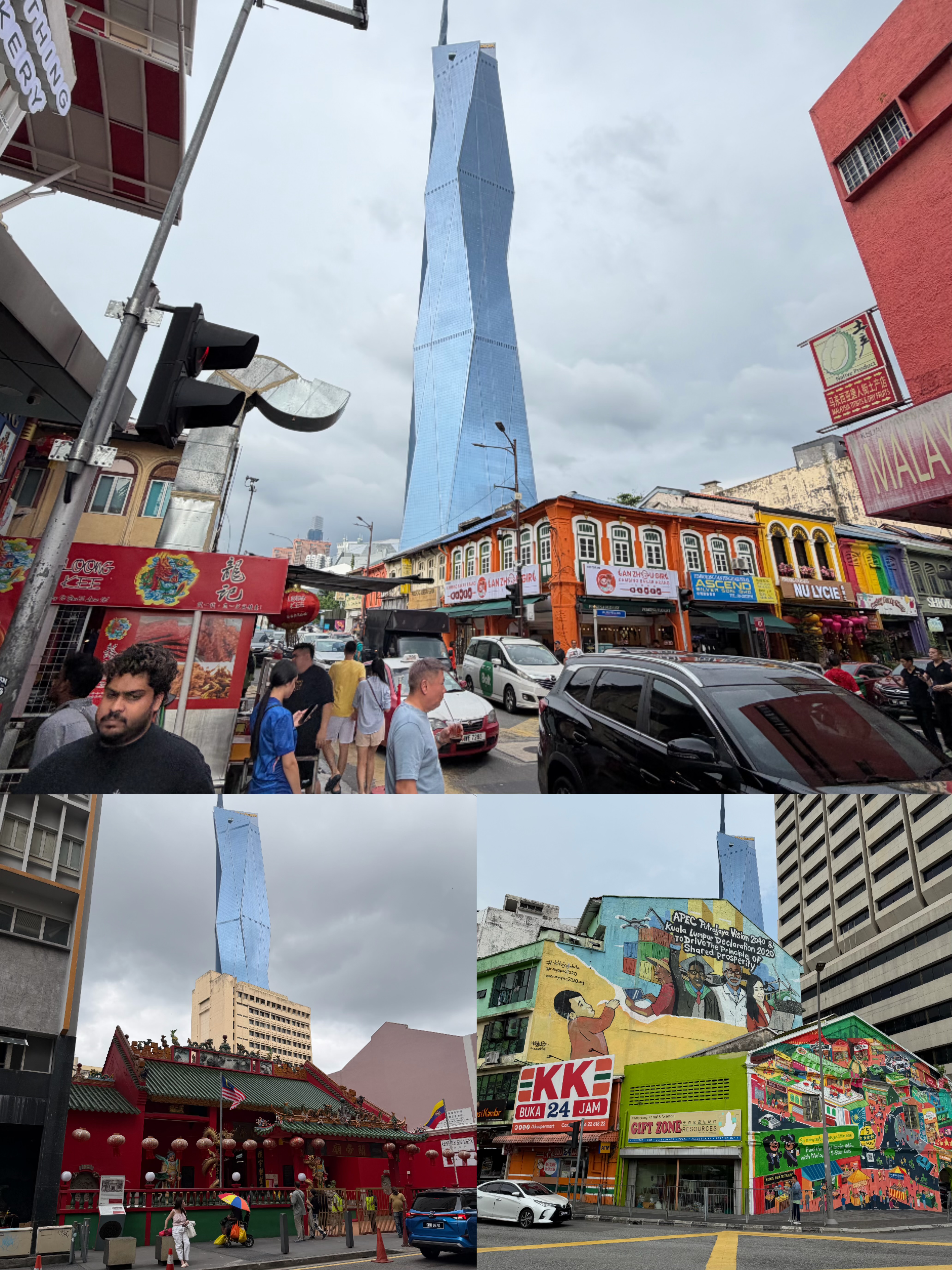
Around Chinatown there’s also an old Chinese temple, and a narrow alley completely covered in graffiti, with names and messages written on the walls by people from all over the world. Behind all of it you can see the newer skyline, so you get this contrast of old shophouses in front and glass towers behind.
The tallest building, and why Shanghai Tower is better
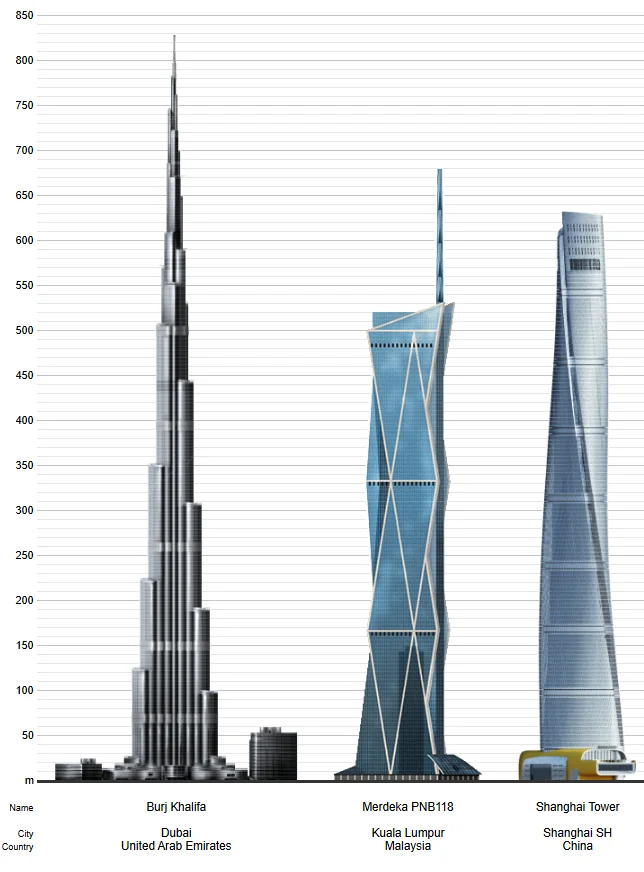
One blue tower kept showing up in the background of my Chinatown photos. I didn’t go to it, it’s not really downtown, and I wouldn’t have known what it was if I hadn’t looked it up. It’s called Merdeka 118, and it’s currently the second-tallest building in the world, having beaten Shanghai Tower for that title.
Here’s the thing though. Standing in the city, it doesn’t even look that tall. And when you look at why it “won,” it’s mostly the spire. The building is about 679 meters, but 158 of that is just a pointed needle on top, and the actual floors stop around 515 meters.
Compare that to Shanghai Tower, which I know well because I’ve stayed at the J Hotel inside it. That building is 632 meters and almost all of it is real, usable floors. When you stand right at the bottom and look up, it is so, so tall, I’m not exaggerating. The very top is often literally in the clouds. It feels enormous in a way Merdeka 118 just doesn’t, even though the ranking says Merdeka is taller. Rankings count the decorative spire. I count the part you can actually stand in.
Merdeka Square
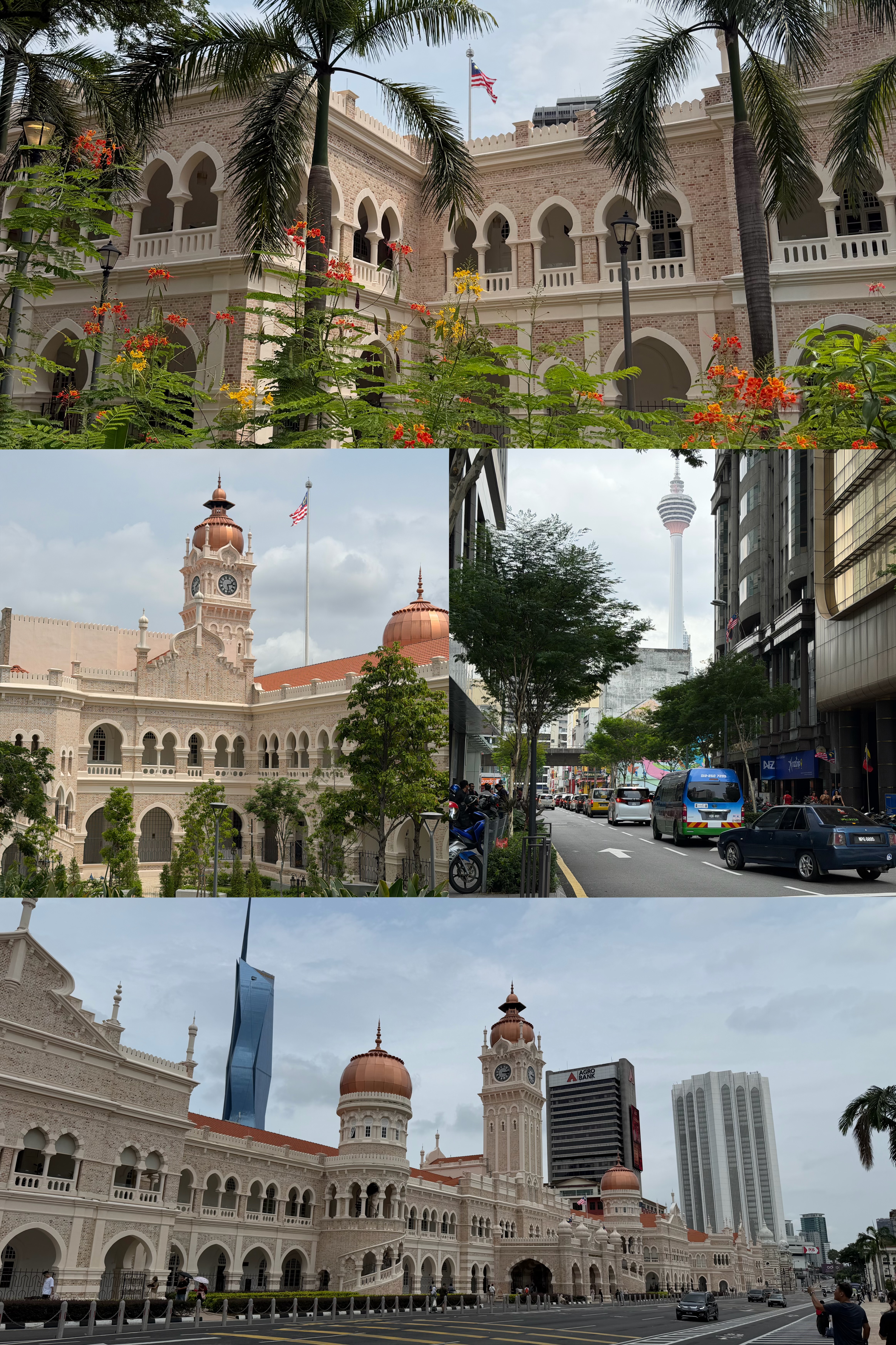
My favorite part of the old city was Merdeka Square, which means Independence Square. It’s a big open green field where Malaysia raised its flag for the first time in 1957 when it became independent. Facing it is the Sultan Abdul Samad Building, a beautiful old building from 1897 with copper domes and a clock tower, built when the British ran the place.
What I liked most was just walking around there, especially along the river. And it turns out that river is the whole reason the city exists. Kuala Lumpur is right where two rivers, the Klang and the Gombak, meet, and the name literally means “muddy confluence” in Malay. That exact spot is where the city started. They’ve cleaned the rivers up in recent years, so now you can walk along the water past the old buildings, and it’s calm and green and quiet in a way the rest of KL isn’t. I didn’t expect to like it as much as I did, but it was genuinely really nice.
Food
The food was my favorite part. KL has this huge mix, Malay, Chinese, and Indian food all in the same neighborhoods, sometimes on the same street.
On my last day I ate at Oriental Kopi in Suria KLCC, the mall under the Twin Towers. It’s a really popular local chain, so popular that I’ve now also spotted another branch of it here in the airport while writing this. The story behind it is nice: it started with a chef from Hainan in China who sailed to Southeast Asia when he was young, learned Western cooking while working on ships, and blended it all into a Chinese-Malaysian “Nanyang” style. The result is things like their buns, egg tarts, and thick local coffee. It feels like Chinese cooking that came abroad a long time ago and became its own thing, and locals clearly love it, not just tourists. That kind of mix is the thing I’ll remember most about KL.
I also went to the McDonald’s near my hotel in Bukit Bintang twice. The first time, they forgot to give me my fries. Small thing, but it made me laugh.
The people
The other thing you notice quickly is how mixed the population is, and how much more visible religion is than in Shanghai. A lot of the Muslim women here dress modestly, with their hair or bodies covered. It’s just a normal part of daily life, and together with the mix of Malay, Chinese, and Indian people everywhere, it makes the city feel quite different from home in a way I liked.
One thing that made it easy for me: a lot of people here speak Chinese. There’s a big Malaysian Chinese community (华人), so in a lot of shops and restaurants I could just speak Mandarin. And even when I couldn’t, English works basically everywhere. Coming from China, that made the whole trip feel very low-stress. I never once felt stuck trying to communicate.
The airport, and my film
One last thing that surprised me, right at the end. At KL’s airport the security check isn’t one big checkpoint you clear once. Instead each gate has its own security screening right before you board. So you walk fairly freely through the terminal, and then get screened at your specific gate.
The catch is that all the shops are before that gate screening. So any drink you buy in the terminal gets taken off you at the gate, because you’re crossing a fresh security check, and the little waiting area past it has nowhere to buy another. I found this out the annoying way. If you fly through here, just finish your drink before the gate.
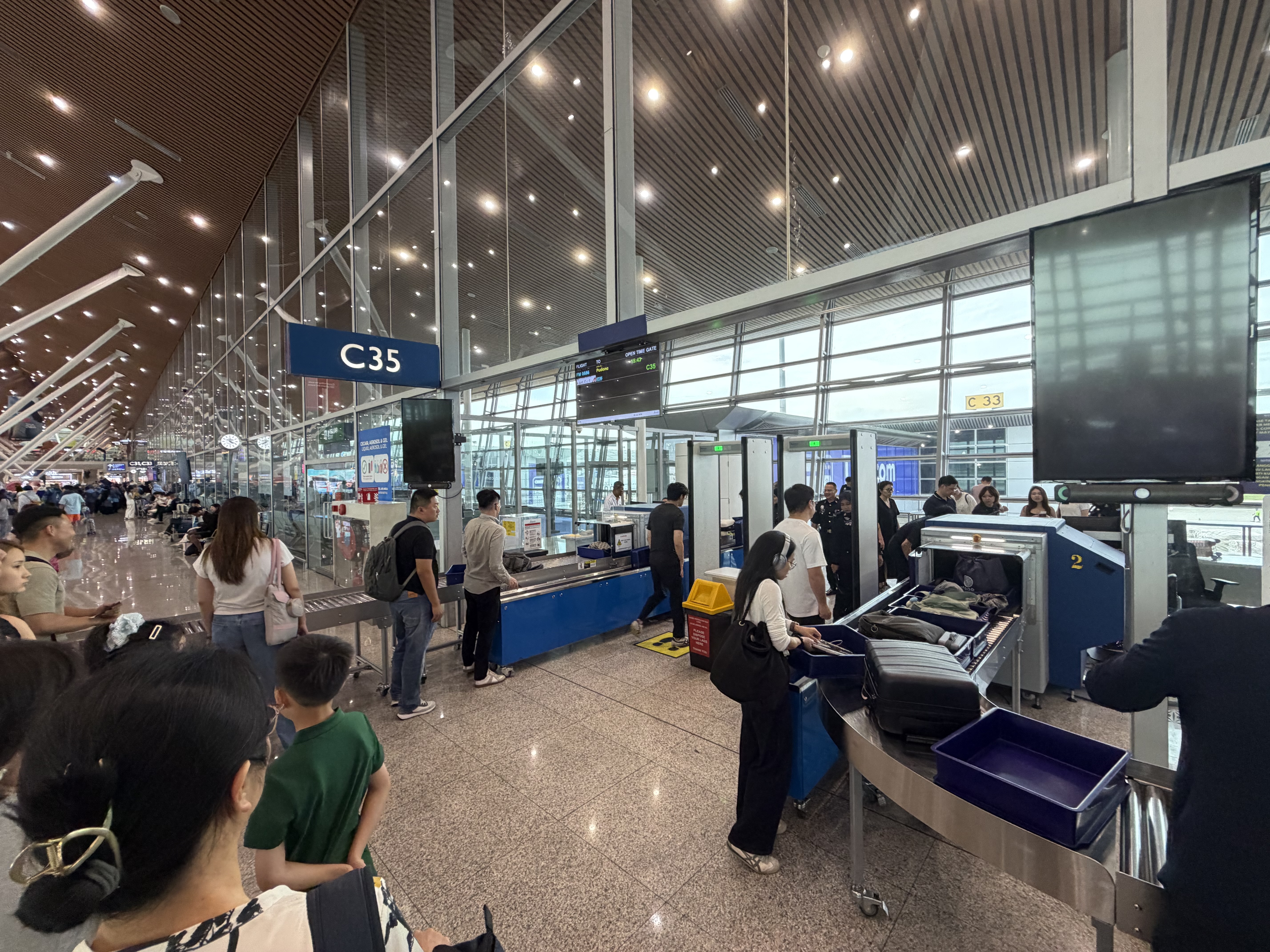
The gate security also mattered for me because I’m shooting film. On this trip I brought my Canon AE-1 Program and my little Snapic A1, and I picked up a fresh roll of Harman Phoenix II at Central Market, an old indoor market in the city, where it cost a bit more than it does in China. Modern airport scanners can fog film, so I asked them to hand-check my rolls instead of sending them through the machine. They were friendly about it and checked everything by hand, so my film made it through safely. That was a relief, because the whole point of the trip’s photos is riding on those rolls.
I didn’t develop anything in KL. I’m taking it all home and will develop and scan it in Shanghai, then put the photos up on AvoidXray, my film photography site. So this post is only half the trip, really. The rest is still sitting undeveloped in my bag.
Overall
Coming from Shanghai, KL feels older and a little messier, and prices are about the same for things that are usually a bit older. But I really don’t mean that as a complaint. It’s relaxed, friendly, and easy to be in, the food is great, and the mix of cultures is genuinely special. For my first real trip into Southeast Asia, it was a good one, and I’m glad I came.